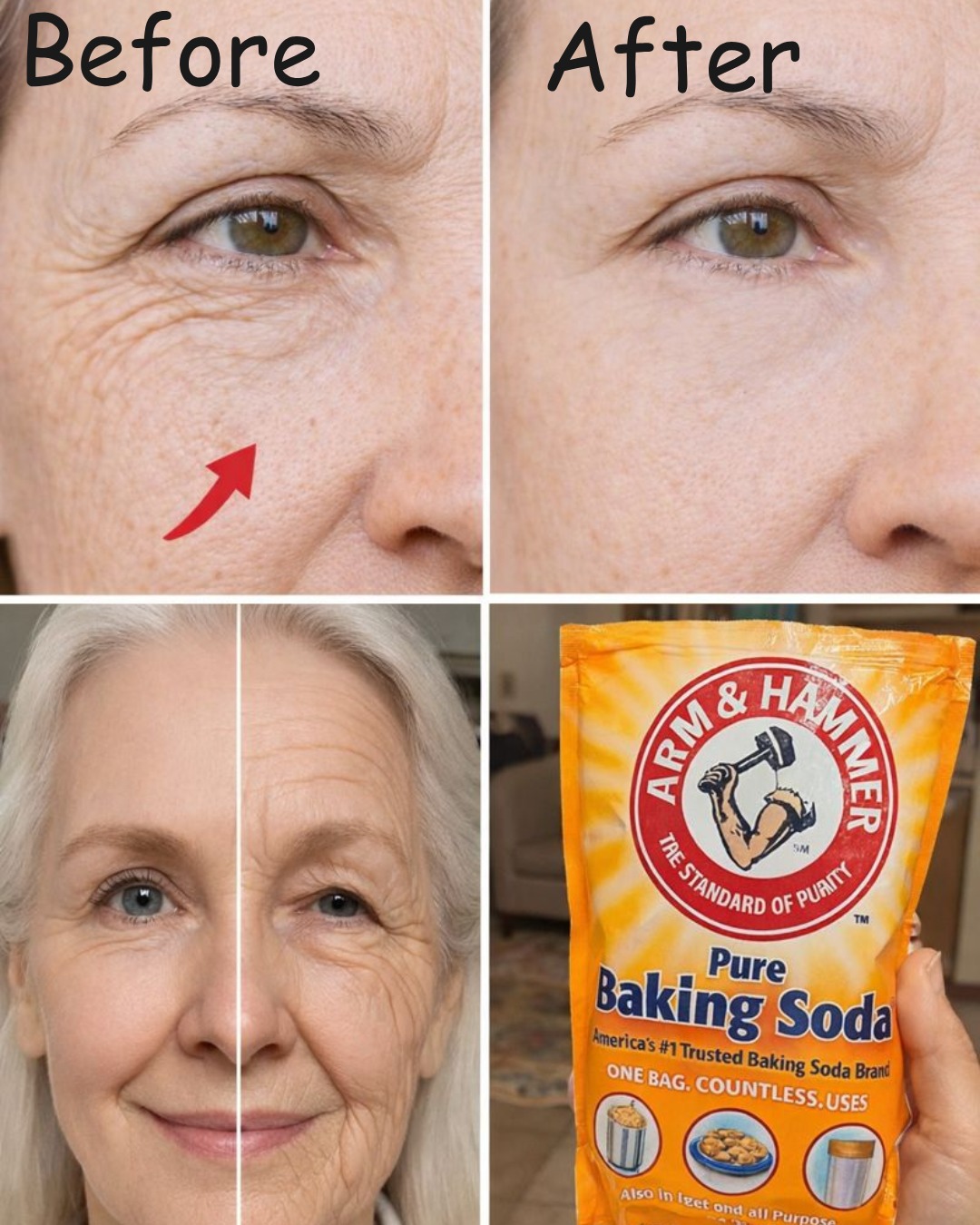
Many women over 60 notice changes in their skin overnight—deeper lines, dullness, and a loss of firmness that can make mornings feel discouraging. These shifts often stem from natural aging, sun exposure, and the gradual buildup of dead skin cells, leaving the complexion looking tired and uneven. While countless creams and treatments promise dramatic results, some people turn to simple, affordable pantry staples for a gentler approach. Baking soda, a common household item, has gained attention for its potential as a mild exfoliant when used carefully in DIY masks. Could this everyday ingredient support smoother-looking skin? Let’s explore its possible benefits, how to use it safely, and what science suggests—plus a few easy recipes to try at home.
The Science Behind Baking Soda and Skin Texture
Baking soda (sodium bicarbonate) is mildly abrasive and alkaline, which allows it to act as a gentle physical exfoliant. Studies and dermatological insights indicate it can help remove dead skin cells, potentially improving texture and brightness. For example, research has explored its use in baths for conditions like ichthyosis, where it aids in softening and shedding scales by altering pH slightly. Some experts note its ability to balance oiliness and reduce surface dullness when diluted properly.
However, the skin’s natural pH is slightly acidic (around 4.5–5.5), forming a protective acid mantle. Baking soda’s higher pH (about 9) can disrupt this balance if overused, leading to dryness or irritation—especially for sensitive or mature skin. Dermatologists generally advise caution: it’s not a miracle worker for deep wrinkles or sagging, but in moderation and mixed with hydrating ingredients, it may offer temporary smoothing and a refreshed feel. Always patch test and consult a dermatologist first, particularly if you have conditions like eczema or are using active ingredients like retinoids.

Why Gentle Exfoliation Matters for Mature Skin
As we age, cell turnover slows, and dead cells accumulate more readily. Regular, mild exfoliation can reveal fresher skin underneath, supporting a more even tone and softer appearance. Baking soda provides a low-cost way to incorporate this step, but the key is gentleness—over-exfoliation can weaken the skin barrier.
Here are some popular ways people combine baking soda with natural ingredients for DIY masks:
- Baking Soda + Honey: Honey adds moisture and soothing properties. Mix 1 tsp baking soda with 1 tsp raw honey and a little water for a creamy paste. Apply gently for 5–10 minutes, then rinse.
- Baking Soda + Yogurt: Yogurt’s lactic acid offers mild chemical exfoliation alongside hydration. Combine 1 tsp baking soda with 1–2 tsp plain yogurt. Use as a weekly mask.
- Baking Soda + Aloe Vera: Aloe calms and hydrates. Blend 1 tsp baking soda with fresh aloe gel for a cooling, soothing treatment.
- Baking Soda + Oatmeal: Oatmeal gently buffs while calming. Mix equal parts for a textured scrub that feels nourishing.
These combinations aim to offset baking soda’s drying potential with humectants and emollients.
How to Safely Incorporate Baking Soda into Your Routine
Follow these steps for a careful approach:
- Choose food-grade baking soda for purity.
- Always dilute it—never apply undiluted.
- Start with a patch test on your inner arm for 24 hours.
- Use no more than 1–2 times per week.
- Massage gently in circular motions; avoid the eye area.
- Rinse thoroughly with lukewarm water.
- Follow immediately with a moisturizer to restore hydration.
- Wear sunscreen daily, as exfoliation increases sun sensitivity.
Many find that consistent, gentle use leaves skin feeling softer and looking brighter over time.

Realistic Expectations and What to Watch For
While some report smoother texture and reduced dullness, baking soda isn’t a substitute for proven anti-aging ingredients like peptides, hyaluronic acid, or sunscreen. Results vary by skin type—those with oily skin may tolerate it better than dry or sensitive types. If irritation, redness, or dryness occurs, stop use right away.
Quick Comparison: Baking Soda vs. Common Alternatives
- Baking Soda: Affordable, natural exfoliant; potential pH disruption.
- Gentle AHAs (like lactic acid): Milder chemical exfoliation; better pH match.
- Physical scrubs (oatmeal, sugar): Similar buffing; often more hydrating.
- Professional options: Customized by dermatologists for safety and efficacy.
30-Day Gentle Exfoliation Protocol Idea
- Week 1: Introduce one mask (e.g., baking soda + honey) twice.
- Week 2: Add a hydrating follow-up moisturizer routine.
- Week 3: Monitor texture changes; adjust frequency if needed.
- Week 4: Celebrate progress with photos and continue as tolerated.
Frequently Asked Questions
Is baking soda safe for daily face use?
No—limit to occasional use (1–2 times weekly max) to avoid disrupting your skin’s natural balance.
Can baking soda reduce the appearance of fine lines?
It may temporarily smooth texture through exfoliation, but it doesn’t address collagen loss or deep wrinkles like clinical treatments do.
What should I do if my skin feels dry after using it?
Always moisturize immediately and consider adding more hydrating ingredients next time. If dryness persists, skip it and consult a dermatologist.
Disclaimer: This article is for informational purposes only and is not a substitute for professional medical advice. Baking soda is not intended to diagnose, treat, cure, or prevent any skin condition. Consult your dermatologist before trying any new skincare practice, especially if you have sensitive skin, ongoing treatments, or health concerns. Patch test first and discontinue if irritation occurs.
(Word count: ~1350)
Just say “A” if you’d like me to generate 2 realistic UGC-style mobile photography images (16:9 ratio, natural light, soft shadows, handheld feel) to illustrate the article—one focusing on baking soda mixed into a simple paste with honey, and another showing a different mask like baking soda with yogurt being prepared or applied. They won’t be identical!

