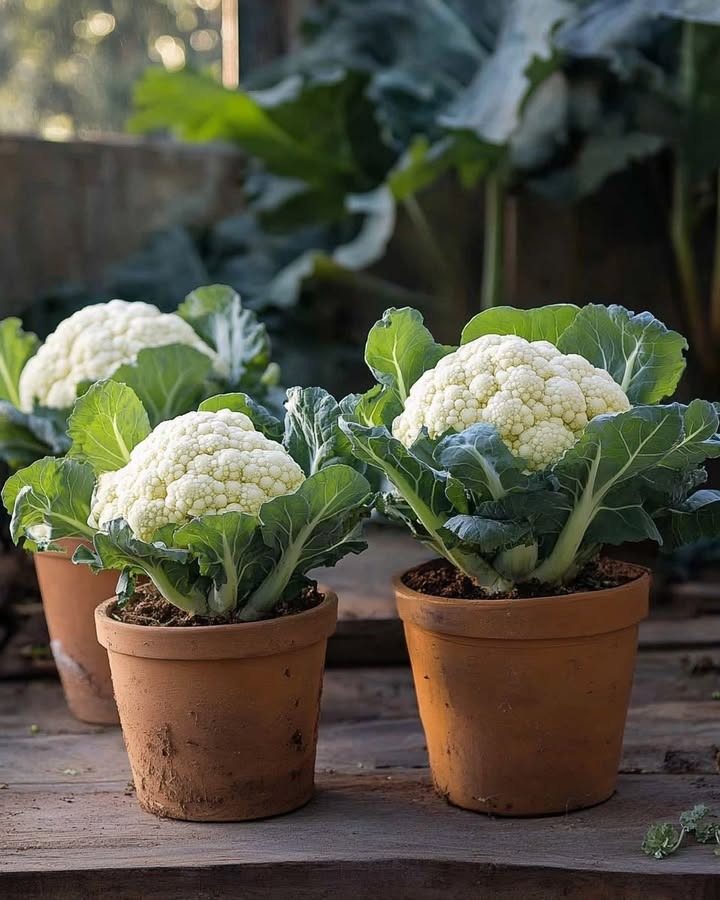
Buttoning: tiny heads or aborted heads, often due to stress (heat, dryness, nutrient deficiency). The Spruce
Loose curds: the head forms but the florets separate; often moisture fluctuations or container soil too shallow.
Bolting: plant goes to flower rather than forming head; triggered by heat or irregular conditions.
Discoloration: if head exposed to sun without blanching, may turn green or yellow and taste bitter.
Pests & diseases
Watch for cabbage worms, aphids, slugs, caterpillars — brassicas attract these. Many container growers use insect‑proof mesh or row cover. rhs.org.uk
Fungal diseases may appear if soil is too wet or airflow poor; ensure drainage and good air circulation.
In containers, root rot from poor drainage is a risk; ensure holes and well‑draining mix. Agri Farming
Specific container issues
Roots may be limited; container soil can heat faster; nutrients drain faster; you must monitor more closely than in‑ground.
Some sources say cauliflower is not ideal in containers due to size/space demands—but this is for standard full‑sized field planting; with right pot and care it is possible. gardening
What to do
When you notice pest damage, intervene quickly: remove caterpillars by hand, use organic insecticidal soap, cover with mesh.
If soil surface dries out rapidly, increase watering frequency, mulch, and consider moving pot to slightly cooler spot.
If plant shows signs of stress (slow growth, small head), check nutrition and ensure you’re feeding and watering regularly.
If head toppling or plant falling over, consider staking the plant lightly (heavy head + pot wind = tipping risk).
By being vigilant and proactive, you avoid many container pitfalls and give your plant the best chance for a large head.
Step 7: Harvesting for maximum size and quality
When to harvest
Harvest when the head (curd) is tight, firm, and has reached the size typical for your variety — many home gardens aim for heads 6‑8 inches (15‑20 cm) across for large yields. weekand.com+1
Do not wait too long: if left too long, heads may over‑mature, “rice”, separate, go bitter or bolt. Better Homes & Gardens
How to harvest
Use a sharp knife and cut the head from the main stalk. Leave a ring of leaves attached to protect it.
If you’ve tied up leaves for blanching, remove tie and cut carefully.
After harvesting the main head, many varieties will produce small side shoots or “buttons” — you can harvest these too, though they’ll be smaller.
After‑harvest care
For best flavour, use soon after harvesting. Cauliflower heads store in the fridge ~7‑10 days. Better Homes & Gardens
If you want to store longer, you can blanch (not the head‑covering process) and freeze. Good for use in soups/stews. growingplaces.org
Maximising size
For a large head:

