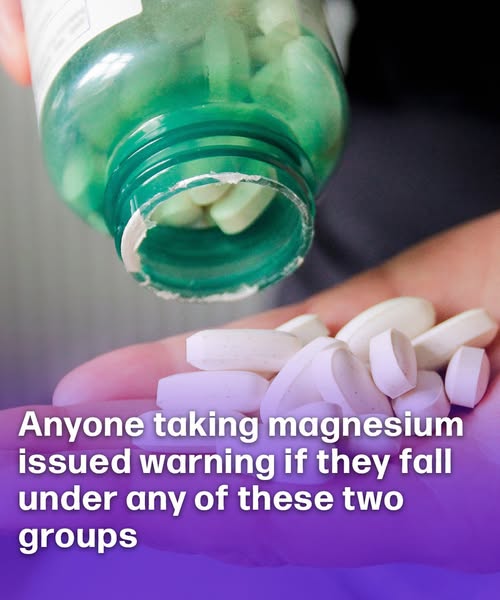
This warning might surprise many: if you’re not deficient in magnesium, taking extra won’t give you extra health benefits.
While magnesium deficiency is fairly common — estimates suggest that between 9% and 17% of adults, and up to 20% of teenagers, may have low magnesium levels — many people already get enough through diet. Foods like leafy greens, nuts, seeds, beans, and whole grains are rich sources of the mineral.
But despite the growing popularity of supplements, experts say that taking magnesium when you don’t need it is not only unnecessary — it can also cause uncomfortable side effects such as:
Diarrhea
Nausea
Stomach cramping
Vomiting
And if taken in very high doses, those mild symptoms can progress to more dangerous reactions like an irregular heartbeat or low blood pressure.
Ezoic
Dr. Noorhan Nassar, a primary care physician at Houston Methodist, explained:
“The data supporting benefits of magnesium supplementation in otherwise healthy adults isn’t complete. The results are mixed, and the design of many studies isn’t ideal.”
He also pointed out that magnesium is known to act as a natural laxative, which can cause digestive upset even at moderate doses.
Simply put, if you aren’t deficient, magnesium isn’t likely to improve your health — and in some cases, it may make you feel worse.
How Much Magnesium Do You Really Need?
The recommended daily intake of magnesium varies slightly by age and gender, but according to the NHS and U.S. dietary guidelines:
Adult men should get around 300 mg per day
Adult women should aim for about 270 mg per day
That’s not difficult to achieve through a balanced diet. Magnesium is naturally found in:
Almonds, cashews, and peanuts
Spinach and kale
Whole grains like brown rice and oats
Black beans and lentils
Ezoic
Avocados and bananas
Health authorities caution against taking more than 400 mg a day from supplements, as higher doses can cause health complications, especially over time.
If you’re concerned about magnesium levels, it’s always better to get tested before starting any supplement. A simple blood test can determine whether you truly need extra magnesium or if your diet is already meeting your body’s needs.
The Social Media Supplement Trap

