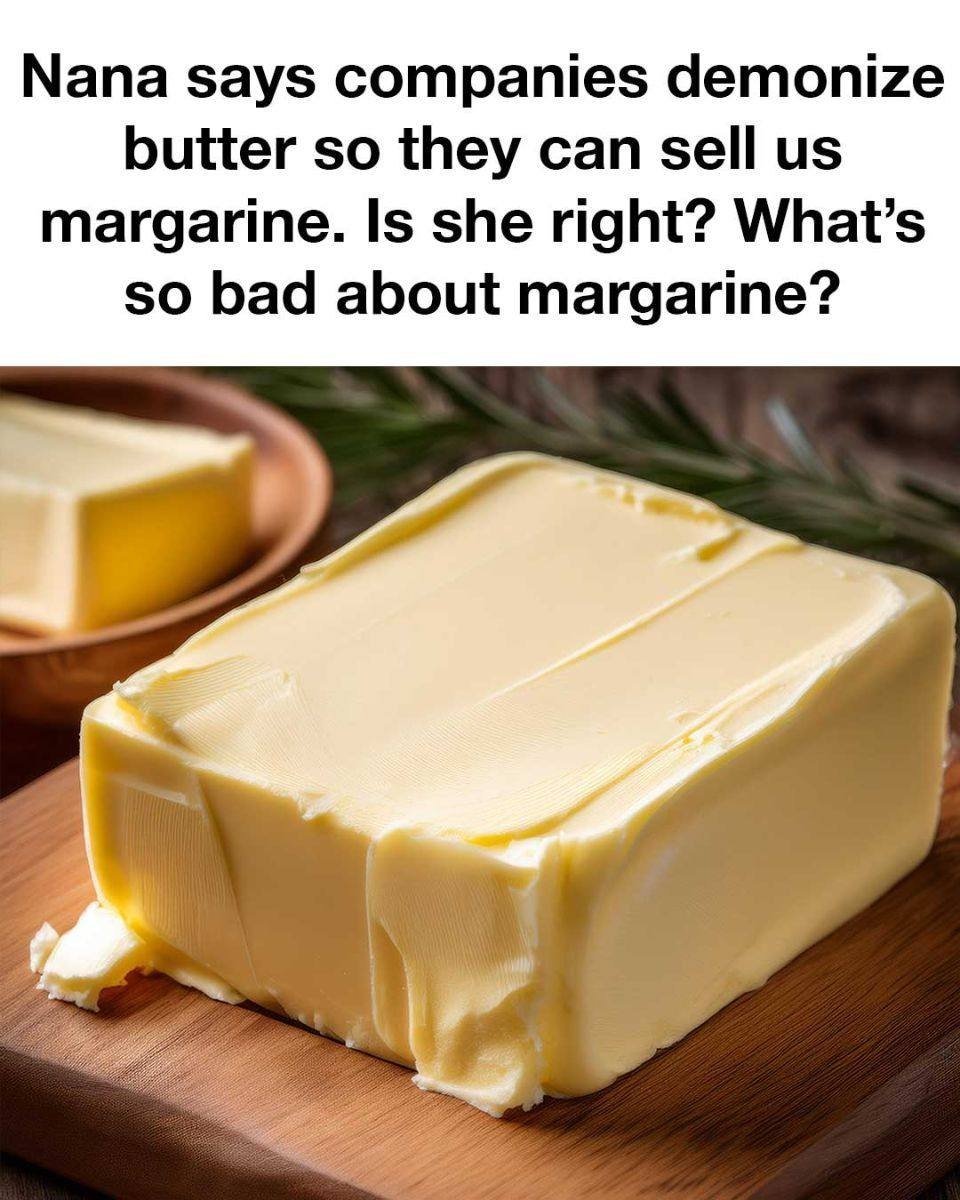
Nana’s belief boils down to this: companies capitalized on early health fears to vilify butter and position margarine as a modern, healthier alternative. This wasn’t necessarily a shadowy boardroom plot, but a powerful narrative that took root. As public health guidelines began warning about saturated fats and cholesterol, the margarine industry was perfectly positioned to offer a “heart-healthy” solution—a claim that would later be revealed as deeply flawed.
The Nutritional Showdown: Then vs. Now
To understand the debate, we need to look at what each product is made of.
-
Butter: Simple and natural. Its main point of contention is its high saturated fat content, which was linked to heart disease. However, it also contains beneficial nutrients like Vitamins A, D, and E.
-
Margarine (The Old Kind):
A processed product made from vegetable oils. To make these oils solid, they underwent hydrogenation, which created trans fats. We now know trans fats are far worse for heart health than the saturated fats in butter.
-
Margarine (The New Kind): Most modern margarines have eliminated trans fats. However, they are still highly processed concoctions of water, oil, and emulsifiers, often requiring artificial flavors and colors to mimic the taste and look of butter.
The irony is stark: for decades, many people switched from natural butter to margarine laden with harmful trans fats, believing they were making a healthy choice.

