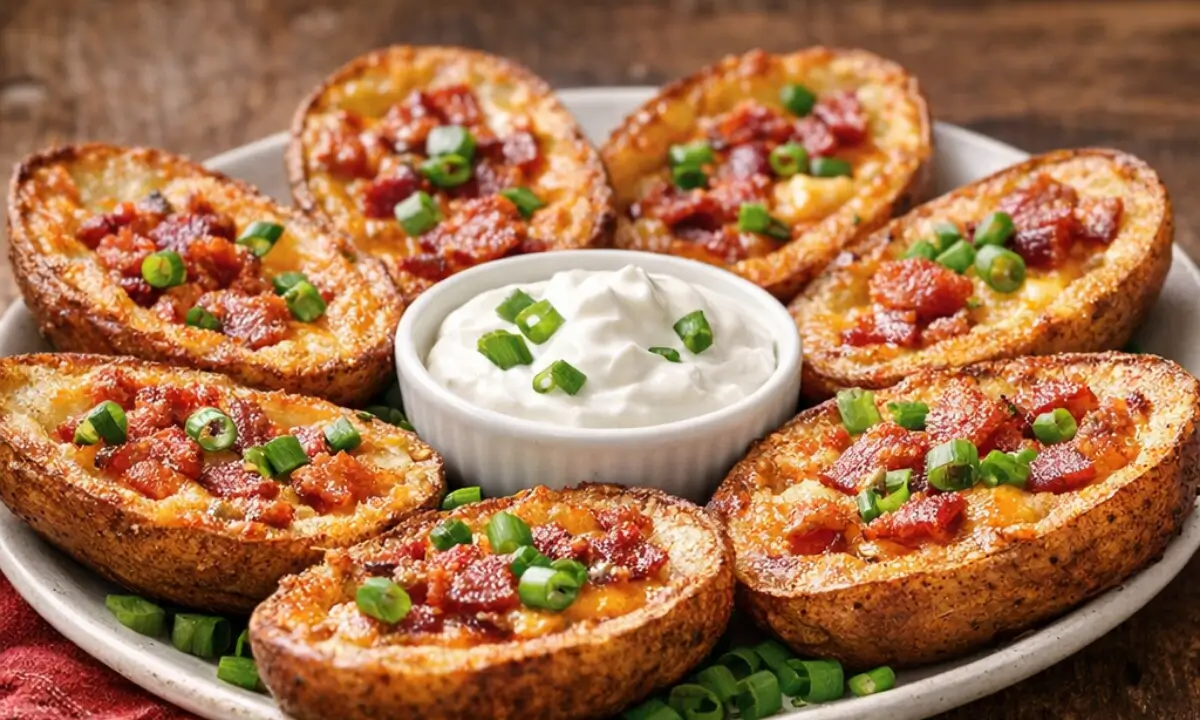
There are some foods that don’t need an introduction. They don’t chase trends, they don’t reinvent themselves every five years, and they certainly don’t apologize for being indulgent. Potato skins are one of those foods. Crispy, salty, cheesy, and comforting to the core, they belong to the same category as deviled eggs, cheese balls, and casseroles baked in scratched Pyrex dishes—foods that show up, quietly steal the spotlight, and disappear before you even notice.
I still remember the first time I had potato skins that weren’t frozen or ordered from a restaurant. They came out of my aunt’s oven on a Sunday afternoon, set down on a paper-towel-lined plate, steam rising, cheese bubbling, bacon crisp and fragrant. There was no fancy garnish, no drizzle, no clever name. Just potatoes, cheese, bacon, and a bowl of sour cream on the side. And somehow, they tasted better than any version I’d ever had before or since.
That’s the magic of potato skins. They don’t try to be impressive. They just are.
In this post, we’re going back to the roots—real potatoes, a hot oven, simple ingredients, and the kind of method that generations before us relied on. No shortcuts. No gimmicks. Just the kind of recipe you make once, then forever after without needing to look it up again.
Why Potato Skins Never Go Out of Style
Potato skins have been around for decades, and there’s a reason they keep showing up at parties, family gatherings, and game-day spreads. They hit every craving at once. Crispy edges. Soft centers. Salty bacon. Melted cheese. Cool sour cream to balance it all out. They’re rich without being overwhelming, hearty without being heavy, and familiar in the best possible way.
They’re also practical. Potato skins stretch a few ingredients into something that feeds a crowd. They turn what might otherwise be kitchen scraps—the potato shells—into the star of the table. That kind of frugality and creativity is deeply rooted in old-fashioned home cooking, where nothing went to waste and flavor was built with care rather than excess.
And maybe most importantly, potato skins invite people to gather. They’re meant to be shared. You don’t eat potato skins quietly at a desk. You eat them standing around the kitchen, perched on the edge of the couch during a game, or leaning over a coffee table with family and friends.
The Secret to Truly Great Potato Skins
The difference between “okay” potato skins and memorable ones comes down to three things: the potato, the bake, and restraint.
First, the potato matters. Russet potatoes are the gold standard here. Their thick skins crisp beautifully, and their fluffy interiors scoop cleanly without tearing. Smaller potatoes dry out too quickly, and waxy varieties just don’t give you that contrast between crisp shell and soft center.
Second, baking—not boiling—is essential. Baking concentrates flavor and keeps the skins sturdy. When you bake the potatoes whole first, you set yourself up for that irresistible crisp later on.
And third, restraint. This might sound odd when we’re talking about cheese and bacon, but too much filling can ruin the balance. The best potato skins let the potato itself shine. Cheese and bacon enhance, not smother.
Ingredients You’ll Need
This is the classic, old-school version—the one many of us grew up with or wish we had.
- Large russet potatoes
- Olive oil or melted butter
- Salt and black pepper
- Shredded sharp cheddar cheese
- Cooked bacon, crumbled
- Green onions or chives (optional)
- Sour cream, for serving
That’s it. No specialty cheeses. No sauces. No complicated prep. Just honest ingredients that work together the way they always have.
Step-by-Step: How to Make Old-Fashioned Potato Skins
1. Bake the Potatoes
Start by scrubbing the potatoes well and drying them thoroughly. Pierce each one a few times with a fork, rub lightly with oil, and sprinkle with salt. Bake them directly on the oven rack until the skins are dry and crisp and a knife slides in easily.
Let the potatoes cool just enough to handle. This step matters—cutting into them while they’re too hot can tear the skins.
2. Slice and Scoop
Cut each potato in half lengthwise. Using a spoon, gently scoop out most of the flesh, leaving about a quarter-inch of potato attached to the skin. Don’t rush this. Slow, gentle scooping keeps the skins intact.
Save the scooped potato for mashed potatoes, soup, or breakfast hash. Old kitchens never wasted good food.
3. Crisp the Skins
Brush both sides of the potato skins with oil or melted butter. Season lightly with salt and pepper. Place them skin-side down on a baking sheet and bake again until they start to crisp, then flip and bake a bit longer.
This second bake is what separates soggy skins from great ones. You want them golden, slightly blistered, and sturdy enough to hold toppings without collapsing.
4. Add the Toppings
Flip the skins back over and sprinkle each one with shredded cheddar and crumbled bacon. Return them to the oven just until the cheese melts and bubbles.
Pull them out while they’re still hot and finish with chopped green onions if you like.
5. Serve Immediately
Potato skins are at their best straight from the oven. Serve them hot with sour cream on the side and plenty of napkins. These are not dainty food—and they’re better for it.

 All-Clad Hard-Anodized Nonstick Fry Pan
- Premium Pick
Even heat, durable nonstick, perfect for everyday cooking and searing. Get it on Amazon
 All-Clad Hard-Anodized Nonstick Fry Pan
- AmazonBasics Pre-Seasoned Skillet
- Best Value Cast Iron
Pre-seasoned, oven-safe, and ideal for classic comfort cooking. Get it on Amazon
- Aluminum Nonstick Frying Pan
- Lightweight & Easy
Quick heating, simple cleanup, great for fast weeknight meals. Get it on Amazon
Make-Ahead and Party Tips
Potato skins are surprisingly forgiving, which makes them perfect for entertaining. You can bake and scoop the potatoes earlier in the day, then crisp and top them just before guests arrive. If needed, the skins can be refrigerated after the first bake and crisped later with no trouble.
For large gatherings, set them out in batches. Fresh, hot potato skins disappear faster and taste better than a huge platter sitting out too long.
Variations (Without Losing the Soul)
While the classic version will always be my favorite, potato skins do welcome a little creativity—so long as you don’t lose sight of what makes them special.
You can add a sprinkle of mozzarella for extra melt, a pinch of smoked paprika for depth, or swap bacon for leftover ham. Some families add a spoonful of chili or pulled pork, especially for game days. Others keep them vegetarian with broccoli and cheese.
The key is not to overload. Let the potato stay front and center.
Storage and Reheating
If you happen to have leftovers, potato skins can be stored in the refrigerator for up to three days. Reheat them in the oven or air fryer until crisp again. Avoid the microwave—it softens the skins and dulls the flavor.
That said, leftovers are rare.
Why This Recipe Still Matters
In a world of viral recipes and endless food trends, there’s something grounding about returning to dishes like potato skins. They remind us that good food doesn’t need to be complicated. It needs care, patience, and a little butter.
These are the kinds of recipes that get passed down not because they’re written perfectly, but because they’re remembered. Someone shows you once, you make them together, and suddenly they belong to you too.
That’s the kind of cooking that lasts.
Frequently Asked Questions
Can I make potato skins ahead of time?
- Yes. Bake and scoop the potatoes ahead, then do the final crisping and topping just before serving.
What’s the best potato to use?
- Russet potatoes are ideal because of their thick skins and fluffy interior.
Can I freeze potato skins?
- You can freeze them after the second bake but before adding toppings. Reheat in the oven, then add cheese and bacon.
How do I keep potato skins crispy?
- Bake directly on the oven rack for the first bake and avoid overcrowding the pan during the second bake.
Can I make these vegetarian?
- Absolutely. Skip the bacon and add vegetables like broccoli, mushrooms, or green onions.
Why do my potato skins turn soggy?
- Too much filling or skipping the second bake usually causes sogginess.

